


Sri Bairavar Exportss is a government-recognized export company in Coimbatore, Tamil Nadu, specializing in Moringa products, Indian millets, herbal ingredients, natural sweeteners, coir products, and engineering goods. Established in 2012, we serve g...
- (+91) 7305640684
- mvkmarketing@gmail.com
- Sri Bairavar Exports No. 31, Ramasamy Thevar Street, Ramanathapuram, Near Ramanatha Puram Signal, , Coimbatore, Tamil Nadu, India. 641045
© 2020 SRI BAIRAVAR EXPORTSS. All Rights Reserved
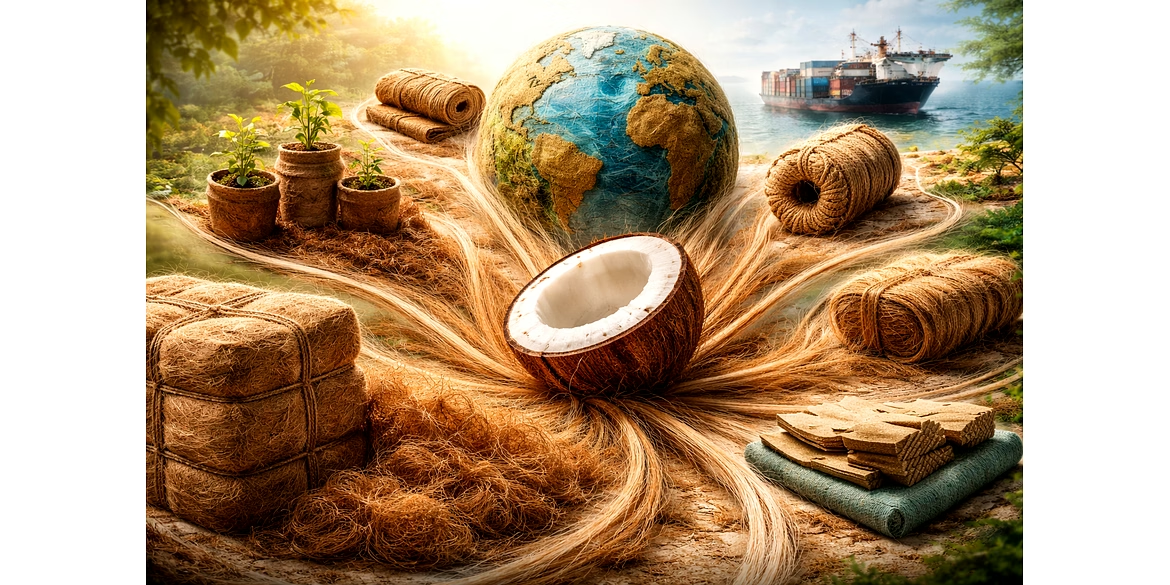

Coconut fiber, commonly known as coir fiber, is one of the most versatile and sustainable natural fibers exported from India. Derived from coconut husks, coconut fiber is widely used across horticulture, agriculture, geotextiles, mattress manufacturing, rope production, and eco-friendly industrial applications.
India is one of the world’s leading producers and exporters of coconut-based products. With growing global demand for biodegradable materials and sustainable alternatives, coconut fiber has become an important commodity for international importers, wholesalers, and distributors. This coconut fiber export guide explains the major commercial applications, export standards, packaging practices, and global demand trends for coir fiber.
What Is Coconut Fiber (Coir Fiber)?
Coconut fiber is extracted from the outer husk of mature coconuts. It is naturally durable, resistant to saltwater, biodegradable, and environmentally friendly. These qualities make coir fiber suitable for a wide range of agricultural, industrial, and commercial uses in international markets.
Key characteristics of coconut fiber include:
High tensile strength
Natural resistance to moisture
Biodegradable composition
Eco-friendly sourcing
Long-lasting durability
Its strong sustainability profile makes coconut fiber highly attractive in global markets where buyers increasingly seek renewable, biodegradable, and export-ready raw materials.
Coconut fiber serves multiple industries, which significantly increases its export potential and global trade value. Its versatility makes it suitable for both large-scale industrial manufacturing and eco-conscious agricultural use.
Common commercial applications include:
Horticulture and greenhouse farming
Soil erosion control through geotextiles
Rope and twine manufacturing
Mattress and upholstery filling
Landscaping and gardening solutions
This multi-industry utility supports steady international demand for coconut fiber and strengthens India’s position in the coir fiber export market.
Coconut Fiber in Horticulture & Agriculture
One of the fastest-growing sectors for coconut fiber export is horticulture. Coir fiber is widely used in greenhouse farming, nursery cultivation, and hydroponics because of its excellent water retention and aeration properties. These characteristics make it an ideal growing medium for modern agricultural systems.
Benefits of coconut fiber for agricultural use include:
Improved root growth
Sustainable soil alternative
Moisture retention efficiency
Organic farming compatibility
Reduced chemical dependency
European and Middle Eastern markets show strong demand for agricultural-grade coir fiber, particularly among buyers focused on organic farming, controlled-environment agriculture, and eco-friendly substrate solutions.
Coconut fiber is widely used in biodegradable geotextiles for erosion control and land stabilization projects. Coir mats and netting help prevent soil degradation while supporting vegetation growth, making them valuable in both public infrastructure and environmental restoration projects.
Key infrastructure uses include:
Roadside erosion protection
Riverbank stabilization
Landscaping reinforcement
Slope protection systems
Eco-friendly civil engineering projects
As governments and contractors invest more in sustainable infrastructure, demand for coir geotextiles and erosion control solutions continues to rise in developing and environmentally regulated markets.
Coconut Fiber in Industrial & Consumer Products
Beyond agriculture and infrastructure, coconut fiber is widely used in manufacturing a variety of industrial and consumer products. Its strength, resilience, and natural composition make it suitable for both traditional and modern applications.
Industries importing coconut fiber include:
Mattress manufacturers
Upholstery producers
Rope and cordage factories
Automotive seat manufacturers
Packaging material suppliers
Its durability and natural strength make coconut fiber suitable for heavy-duty applications where buyers want sustainable raw materials without sacrificing performance.
Coconut fiber is typically exported in compressed bales to optimize container space and reduce international freight costs. Proper export packaging is essential to maintain product quality, prevent moisture exposure, and improve handling efficiency during transit.
Common export practices include:
Compressed bale packaging
Containerized sea freight
Moisture-resistant wrapping
Palletized shipment
Bulk order consolidation
Sea freight remains the most cost-effective shipping method for large consignments of coir fiber.
Global Demand Trends for Coconut Fiber
Growing environmental awareness, sustainability regulations, and changing buyer preferences are driving increased demand for biodegradable raw materials. As industries reduce reliance on synthetic inputs and plastic-based materials, coconut fiber continues to gain importance in global trade.
Major demand drivers include:
Plastic reduction initiatives
Growth in organic farming
Sustainable infrastructure projects
ESG commitments by corporations
Rising demand for eco-friendly packaging
Key importing regions for coconut fiber include Europe, the Middle East, North America, and parts of Asia. This expanding international demand makes coir fiber a strategically important export commodity for buyers and suppliers alike.
International buyers should evaluate suppliers carefully to ensure consistent quality, documentation accuracy, and supply continuity. Selecting a reliable coconut fiber exporter is essential for long-term sourcing success, especially in bulk B2B trade.
Important evaluation criteria include:
Valid Import Export Code (IEC)
Experience in coir product exports
Quality inspection standards
Consistent bale compression quality
Clear export documentation practices
Long-term supplier relationships can help ensure pricing stability, shipment consistency, and smoother communication.
Frequently Asked Questions (FAQ)
1. Why is India a major exporter of coconut fiber?
India has abundant coconut cultivation and a well-established coir processing industry, making it one of the largest global exporters of coconut fiber and coir products.
2. What industries commonly import coconut fiber?
Horticulture, geotextiles, mattress manufacturing, rope production, packaging, and related industrial sectors frequently import coir fiber.
3. Is coconut fiber biodegradable?
Yes, coconut fiber is 100% biodegradable and widely valued as an environmentally sustainable natural fiber.
4. How is coconut fiber typically shipped internationally?
It is usually compressed into bales and shipped via sea freight in container loads to optimize volume and reduce freight costs.
5. Does coconut fiber require phytosanitary certification?
Depending on the importing country and the intended use, agricultural or phytosanitary certification may be required.
6. What is the advantage of compressed bale packaging?
Compression reduces shipping volume, improves container utilization, and lowers overall freight costs for bulk exports.
7. Is global demand for coconut fiber increasing?
Yes, due to sustainability trends, plastic reduction policies, and rising demand for biodegradable materials, global demand for coconut fiber continues to grow.