

Sri Bairavar Exportss is a government-recognized export company in Coimbatore, Tamil Nadu, specializing in Moringa products, Indian millets, herbal ingredients, natural sweeteners, coir products, and engineering goods. Established in 2012, we serve g...
- (+91) 7305640684
- mvkmarketing@gmail.com
- Sri Bairavar Exports No. 31, Ramasamy Thevar Street, Ramanathapuram, Near Ramanatha Puram Signal, , Coimbatore, Tamil Nadu, India. 641045
© 2020 SRI BAIRAVAR EXPORTSS. All Rights Reserved
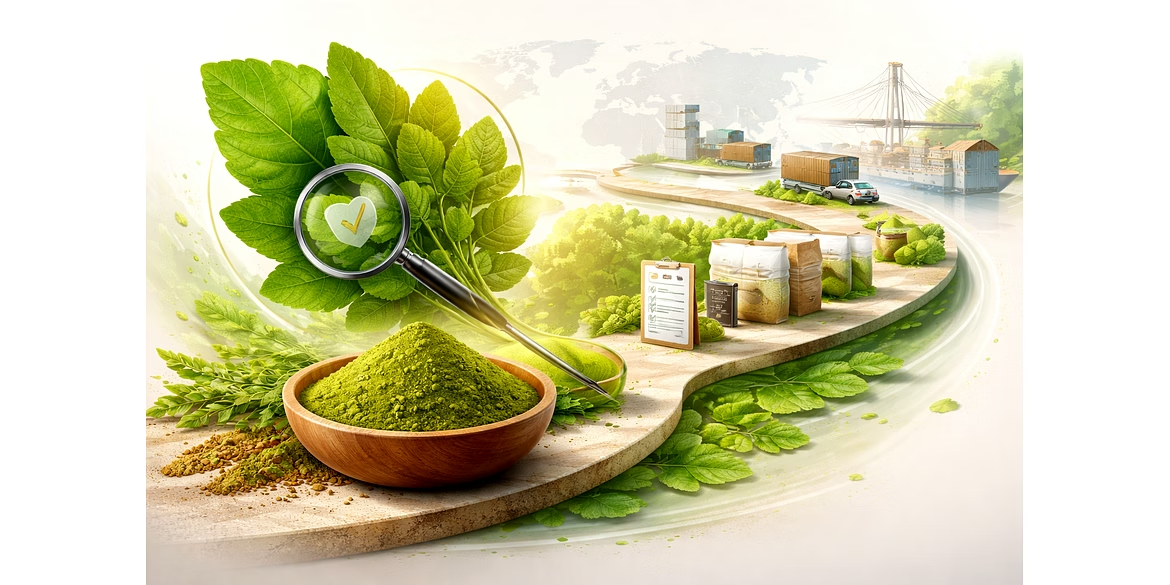

India is one of the world’s leading producers of Moringa Oleifera, especially in Tamil Nadu, where favorable climatic conditions support high-quality leaf cultivation. As global demand for plant-based superfoods continues to grow, international buyers are increasingly sourcing Moringa Leaf Powder in bulk from India.
However, importing nutraceutical ingredients requires a clear understanding of sourcing standards, quality checks, export documentation, packaging, and compliance procedures. This complete guide explains the process of importing Moringa Leaf Powder from India for B2B buyers, nutraceutical brands, supplement manufacturers, and ingredient distributors.
Why Import Moringa Leaf Powder from India?
India has a strong agricultural base and an established export ecosystem for herbal ingredients, superfoods, and agricultural commodities. Tamil Nadu, in particular, is known for consistent Moringa cultivation, making India a preferred sourcing destination for international buyers looking for quality, scalability, and price competitiveness.
Key advantages of sourcing from India include:
Large-scale cultivation capacity
Competitive bulk pricing
Experienced merchant exporters
Established international shipping routes
Availability of export-grade processing
For global nutraceutical brands and distributors, India offers both supply reliability and cost efficiency.
Before placing an order, verify that the exporter is legally registered under Indian trade regulations. A compliant exporter helps ensure smoother customs clearance, greater documentation accuracy, and lower trade risk. This is one of the most important first steps when importing Moringa Leaf Powder from India.
What to check:
Valid Import Export Code (IEC)
APEDA registration for agricultural products
GST registration
MSME or government business registration
Clear company address and documentation transparency
Working with registered exporters reduces legal and compliance complications and improves confidence in long-term B2B sourcing relationships.
Step 2: Define Your Product Specifications
Clear technical specifications help avoid misunderstandings, reduce quality disputes, and support supply consistency. Before negotiating prices or shipment timelines, buyers should define the exact product profile required for their target market or production use.
Typical specifications for Moringa Leaf Powder include:
Mesh size or fine powder grade
Moisture percentage
Color consistency with a natural green tone
Packaging type such as 25 kg bags or custom packaging
Organic or conventional sourcing
Importers should request technical specifications, lab details if available, and product consistency confirmation before finalizing supply contracts.
Sampling is essential for quality evaluation and destination-country testing before committing to bulk purchases. For nutraceutical and food ingredient imports, product approval often depends on physical inspection and laboratory validation.
Benefits of sampling include:
Verifying taste, color, and texture
Conducting microbiological testing
Confirming moisture levels
Evaluating packaging quality
Assessing supply consistency
A reliable exporter should support sample shipments before bulk purchase agreements, allowing the buyer to validate product suitability and reduce procurement risk.
Step 4: Understand Export Documentation Requirements
Importing Moringa Leaf Powder requires proper export documentation to ensure customs clearance in the destination country. Missing or inaccurate paperwork can cause shipment delays, compliance issues, and additional costs.
Common export documents include:
Commercial Invoice
Packing List
Bill of Lading or Airway Bill
Certificate of Origin
Phytosanitary Certificate if required
Regulatory compliance documents
Buyers should also verify import regulations in their own country before shipment.
Bulk Moringa powder must be packed carefully to prevent moisture exposure, contamination, and product degradation during transit. Export packaging plays a major role in maintaining product quality, especially for long-distance shipments.
Export packaging typically includes:
Food-grade inner liners
Multi-layer export bags
Moisture-resistant wrapping
Palletized shipments
Container consolidation options
Shipping methods may include sea freight for large orders or air freight for urgent consignments.
Step 6: Negotiate Pricing & Minimum Order Quantity (MOQ)
Pricing for Moringa Leaf Powder depends on order volume, packaging customization, product grade, and shipping method. International buyers should compare quotations carefully to understand whether prices include packaging, freight, compliance support, or only ex-works or FOB supply.
When negotiating, consider:
Bulk quantity discounts
Long-term supply agreements
Payment terms such as advance payment or letter of credit
Freight inclusion or FOB terms
Seasonal price fluctuations
Large-volume buyers often secure better pricing through annual contracts or recurring supply agreements, improving margin stability and procurement planning.
Successful importers usually focus on building stable supplier relationships instead of treating procurement as a one-time transaction. Long-term partnerships help improve reliability, operational coordination, and supply chain resilience in the nutraceutical sector.
Long-term partnerships offer:
Consistent pricing
Priority production scheduling
Flexible packaging options
Better quality control coordination
Reduced supply chain disruptions
India’s export ecosystem supports repeat bulk orders for nutraceutical brands, ingredient distributors, and supplement manufacturers seeking dependable long-term sourcing.
Key Compliance Considerations for International Buyers
Each country has its own food safety, supplement, and herbal ingredient regulations. Before importing Moringa Leaf Powder, buyers should review destination-country compliance standards carefully to avoid delays, rejected shipments, or financial risk.
Before importing, confirm:
Labeling compliance requirements
Maximum allowable microbial levels
Organic certification requirements if applicable
Supplement registration procedures
Import license requirements
A proactive compliance review reduces customs delays, product rejection, and unexpected regulatory complications in international trade.
Importing Moringa Leaf Powder from India can be a profitable and scalable opportunity for nutraceutical brands, supplement manufacturers, and ingredient distributors. Success depends on choosing the right supplier, maintaining documentation accuracy, and ensuring product compliance at every stage of the import process.
Key success factors include:
Selecting a registered exporter
Defining clear quality specifications
Ensuring documentation compliance
Conducting proper sample verification
Establishing long-term sourcing partnerships
With the right supplier and process, India offers a stable and competitive source for high-quality Moringa powder in global B2B markets.
Frequently Asked Questions (FAQ)
1. Why is India a major exporter of Moringa Leaf Powder?
India has large-scale cultivation, experienced exporters, established processing systems, and strong global shipping infrastructure for herbal and agricultural products.
2. What documents are required to import Moringa powder?
Typically, a commercial invoice, packing list, bill of lading or airway bill, certificate of origin, and in some cases phytosanitary or regulatory compliance documents are required.
3. Can I import Moringa powder in bulk for capsule manufacturing?
Yes, many international buyers import bulk Moringa Leaf Powder and process, encapsulate, or package it in their own facilities.
4. How do I verify an Indian Moringa exporter?
Check for IEC registration, APEDA registration where applicable, GST compliance, a clear business identity, and a consistent export track record.
5. What is the usual MOQ for bulk Moringa powder?
MOQ varies by exporter, product grade, and packaging requirements, but bulk shipments are generally arranged in larger quantities for better cost efficiency.
6. Is sea freight suitable for Moringa powder export?
Yes, sea freight is commonly used for bulk orders because it is more cost-effective for large-volume shipments, while air freight may suit urgent consignments.
7. Can I establish a long-term contract with Indian suppliers?
Yes, many exporters support annual or long-term bulk supply agreements for nutraceutical buyers, distributors, and private label businesses.