


Sri Bairavar Exportss is a government-recognized export company in Coimbatore, Tamil Nadu, specializing in Moringa products, Indian millets, herbal ingredients, natural sweeteners, coir products, and engineering goods. Established in 2012, we serve g...
- (+91) 7305640684
- mvkmarketing@gmail.com
- Sri Bairavar Exports No. 31, Ramasamy Thevar Street, Ramanathapuram, Near Ramanatha Puram Signal, , Coimbatore, Tamil Nadu, India. 641045
© 2020 SRI BAIRAVAR EXPORTSS. All Rights Reserved
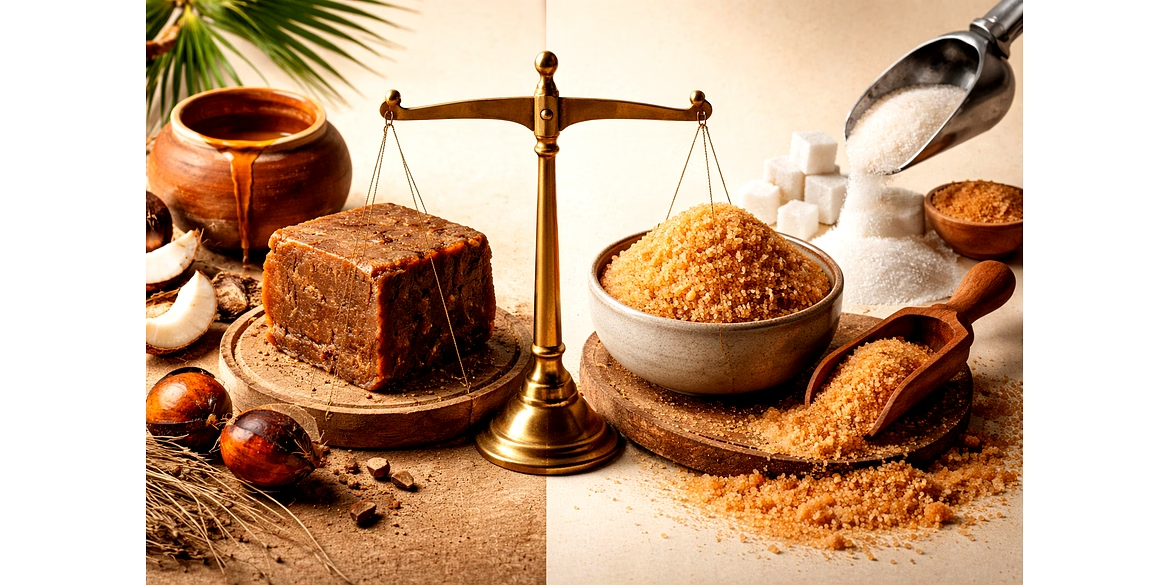

As global consumers shift toward natural and minimally processed sweeteners, both Palm Jaggery and Brown Sugar have gained significant traction in international markets. Importers, food brands, private label companies, and health product manufacturers often evaluate these two products when sourcing from India.
While both are alternatives to refined white sugar, they differ in sourcing, processing methods, nutritional profile, shelf stability, and market positioning. This guide compares Palm Jaggery vs Brown Sugar from a B2B export and international market perspective to help global buyers make informed sourcing decisions.
Understanding Palm Jaggery in International Trade
Palm Jaggery is a traditional, unrefined natural sweetener produced from palm tree sap. It undergoes minimal processing, which helps preserve natural minerals and a more traditional nutritional profile. In international trade, palm jaggery is widely positioned as a premium, natural sweetener for specialty food and wellness-oriented markets.
Palm jaggery is particularly popular in:
Organic food markets
Health-conscious retail brands
Traditional Asian food imports
Specialty sweetener distribution
Ayurvedic and herbal product formulations
Its strong positioning as a natural and traditional sweetener makes palm jaggery attractive in premium food categories.
Brown Sugar is typically produced by adding molasses back into refined sugar or through partial refinement processes. It is widely used in baking, confectionery, beverage applications, and packaged food manufacturing because it offers consistent texture, predictable sweetness, and easier handling in large-scale processing environments.
Brown sugar is commonly preferred in:
Commercial bakery industries
Processed food production
Beverage manufacturing
Mass retail distribution
Industrial-scale food operations
For global buyers focused on standardized food production and high-volume demand, brown sugar often offers greater operational simplicity and wider industrial acceptance.
Nutritional Comparison for Health-Focused Markets
Health positioning plays a major role in sweetener demand, especially in premium and wellness-oriented export markets. Palm Jaggery and Brown Sugar are both used as alternatives to refined white sugar, but they are marketed very differently in health-conscious segments.
Palm Jaggery
Contains natural minerals such as iron and calcium
Less processed than refined sugar
Often perceived as a healthier alternative
Popular in organic product formulations
Brown Sugar
Contains molasses but remains refined sugar
Primarily provides calories from sucrose
Limited mineral content compared to jaggery
More suitable for taste consistency than health positioning
For brands targeting wellness markets, natural food consumers, and traditional sweetener buyers, palm jaggery often provides stronger marketing appeal and premium positioning.
From an export logistics perspective, shelf stability is a critical factor when comparing Palm Jaggery vs Brown Sugar. Importers must consider storage conditions, container transit time, packaging quality, and the climate of the destination market.
Palm Jaggery
May have shorter shelf life in humid conditions
Requires moisture-resistant packaging
Can harden or soften depending on climate
Needs proper storage management
Brown Sugar
Longer shelf stability
Easier to store in bulk
Less sensitive to moisture variation
More stable during long sea freight transit
For long-distance export markets and bulk food distribution, brown sugar may offer simpler storage and logistics management, while palm jaggery requires more careful packaging and handling.
Market Demand & Buyer Segmentation
Understanding target market positioning is essential for international buyers. Palm jaggery and brown sugar appeal to different customer segments, so the better product often depends on the buyer’s distribution strategy, end-use industry, and retail positioning.
Palm Jaggery Demand Drivers
Organic and natural food trends
Growing demand for traditional sweeteners
Ayurveda and wellness product growth
Increasing plant-based consumer segments
Brown Sugar Demand Drivers
Large-scale industrial food manufacturing
Baking and confectionery industries
Standardized food production processes
Mass retail supermarket distribution
Your target customer base will largely determine which sweetener aligns better with your international market strategy.
Cost structure plays an important role in global sweetener sourcing. Buyers must evaluate whether they are targeting premium product margins or large-volume industrial turnover. Palm Jaggery and Brown Sugar differ significantly in how they are positioned in international pricing strategies.
Palm Jaggery
Generally higher price per kg compared to refined sugar
Premium positioning allows higher retail margins
Suitable for niche and specialty markets
Brown Sugar
Lower cost per unit
Higher volume sales potential
Strong demand in industrial food production
Importers must decide whether they prioritize premium natural sweetener positioning or high-volume distribution with standardized food industry demand.
Export Documentation & Compliance Factors
Both Palm Jaggery and Brown Sugar require proper export documentation when sourced from India. Food products must be shipped with accurate paperwork, and importers should confirm whether their destination market requires any additional food safety, testing, or phytosanitary compliance.
Common documentation includes:
Commercial Invoice
Packing List
Bill of Lading
Certificate of Origin
Phytosanitary or food safety compliance, if required
There is no universal answer in the Palm Jaggery vs Brown Sugar comparison. The better product depends on your target customer segment, regulatory environment, logistics capabilities, brand positioning, and price sensitivity in the destination market.
Choose Palm Jaggery if:
You target organic and health-conscious markets
You sell premium natural food products
You focus on wellness and traditional food segments
Choose Brown Sugar if:
You supply large-scale food manufacturers
You prioritize shelf stability
You focus on mass-market food distribution
Many international buyers choose to import both products to diversify their portfolio, serve multiple customer groups, and balance premium margins with high-volume sales.
Frequently Asked Questions (FAQ)
1. Is Palm Jaggery healthier than Brown Sugar?
Palm Jaggery contains natural minerals and is less processed, which makes it attractive for health-focused markets, although both products are still sweeteners.
2. Which product has better shelf life for export?
Brown Sugar typically offers longer shelf stability and is easier to manage during long-distance shipping and bulk storage.
3. Can Palm Jaggery be exported in bulk?
Yes, Palm Jaggery can be exported in bulk packaging when handled with proper moisture-resistant storage and shipping practices.
4. Which product offers better profit margins?
Palm Jaggery often allows higher retail margins because of its premium positioning, while Brown Sugar supports stronger high-volume sales.
5. Is Palm Jaggery suitable for industrial food manufacturing?
It can be used in manufacturing, but its texture, moisture sensitivity, and natural variability may require adjustments in processing systems.
6. Do both products require export documentation?
Yes, both products require standard export documentation such as invoice, packing list, certificate of origin, and shipping paperwork.
7. Which markets show high demand for Palm Jaggery?
Organic and wellness-focused markets in Asia, Europe, and North America show increasing demand for Palm Jaggery and other natural sweeteners.